
NPC Livestreams, Digital Creativity, and the Rise of Technofeudalism
My interview for Euronews Serbia

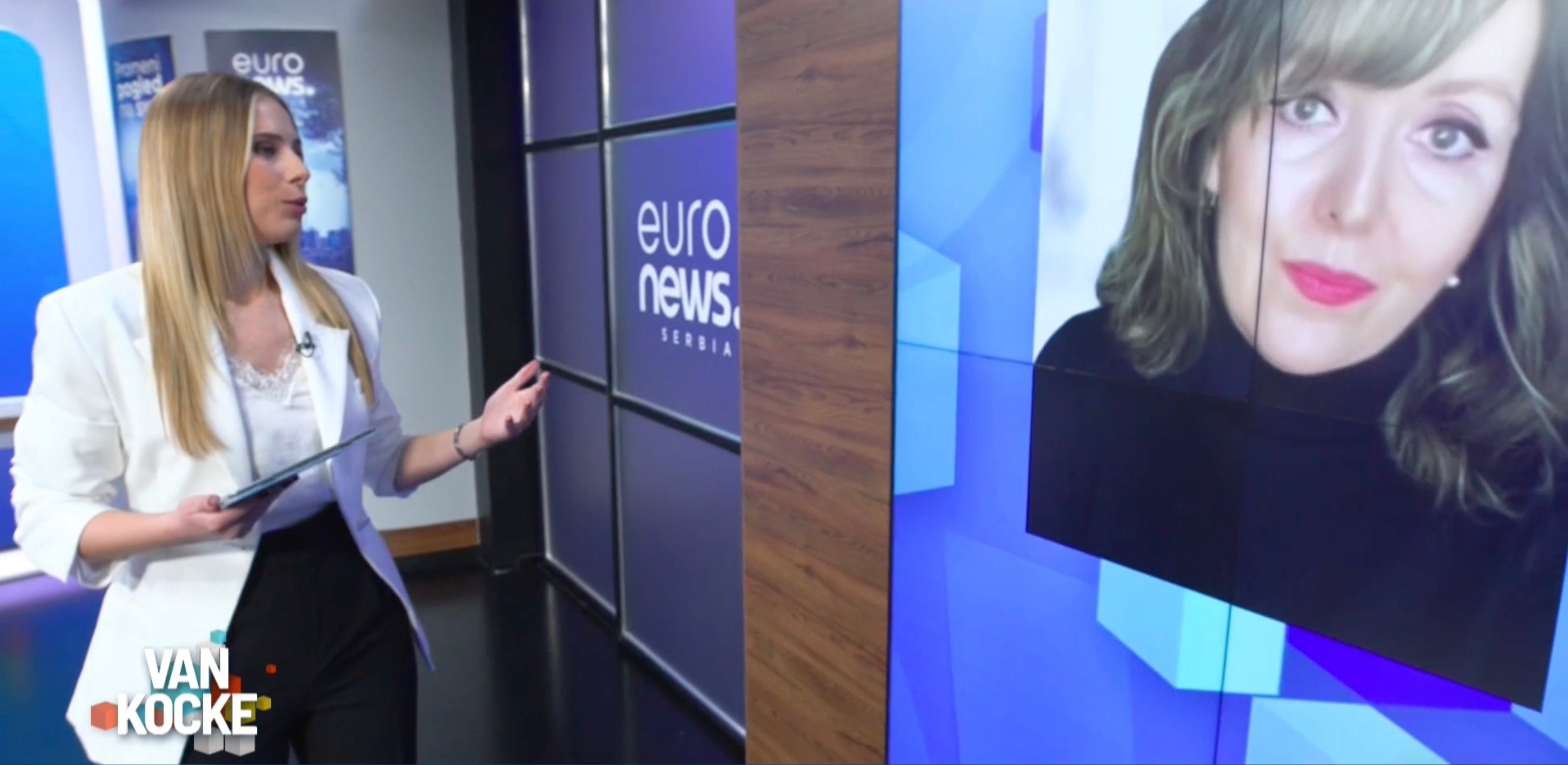
Earlier this week, I gave an interview to Euronews Serbia with journalist Lana Nanovski about a rapidly growing trend on TikTok, NPC-style livestreams that are increasingly used by young people.
At first glance, NPC livestreams on TikTok look playful, even absurd. Repetitive gestures. Scripted phrases. A strange performance somewhere between gaming culture and street theater.
But when you step back, something far more serious comes into view.
What we are witnessing is not a quirky online trend. It is a structural shift in the digital economy, one that exposes how creativity, labor, and survival are increasingly shaped by platforms and algorithms.
For years, youth creativity online was framed as empowerment. Young people learned to edit videos, remix culture, experiment with humor and aesthetics. Platforms promised opportunity: visibility, connection, sometimes even income.
Today, that promise is eroding.
In many parts of the world, especially across the Global South,TikTok is no longer a playground. It is infrastructure. For countless young people, it has become the only accessible source of income, recognition, and social visibility. NPC livestreams thrive precisely where alternatives are limited.
This is where the meaning of creativity quietly changes.
Instead of exploration and self-expression, creativity becomes algorithmic adaptation. Young creators learn what the platform rewards: repetition, emotional intensity, predictability, constant availability. The goal is no longer to create something meaningful, but to remain visible, because visibility itself has become currency.
When survival depends on attention, experimentation becomes risky. Originality becomes expensive. Dignity becomes negotiable.
This is technofeudalism in practice: as Yanis Varoufakis describes it, TikTok controls the land, the rules, and the rent, creators simply work it.
Platforms like TikTok increasingly function as digital fiefdoms. They own the infrastructure, control the algorithms, set the rules of visibility, and govern the flow of money. Creators perform the labor, producing content, attention, and emotional engagement, while the platform captures the largest share of value.
Power concentrates not because creators lack talent, but because they lack ownership: of data, of distribution, of algorithmic logic.
From this perspective, the real question is not “Is this extreme?” The real question is: Are we looking at an isolated phenomenon or at the system revealing itself?
The answer is clear: we are looking at the system.
NPC livestreams are not an anomaly. They are the most stripped-down, brutal, and honest expression of today’s digital economy, one where work is fragmented into seconds, income into micro-donations, and creativity into performative obedience to algorithmic incentives.
And as always, the pressure lands on the same groups first: children, young people, and economically vulnerable communities who depend on digital labor to survive.
This is why NPC livestreams are not just a trend. They are a warning.
They show us what digital work looks like when it is governed by algorithms rather than human needs, when creativity is no longer a path to flourishing, but a strategy for survival.
The urgent question is no longer how to optimize participation in these systems, but how to imagine digital economies that do not require people, especially the young, to trade dignity for visibility.
You can watch the full interview on Euronews Serbia here (the interview is in Serbian; English speakers can enable subtitles on YouTube):
Danica Radovanović, digital inclusion expert, policy advisor, and author.
These essays reflect her own perspectives.
Very informative and insightful observations, Danica!